Korean Orb Face Serum Making Course: Learn Skincare Formulation| Craft Tree Academy
When people first see serum orbs, they might dismiss them as a mere gimmick: a jar of tiny, shimmering spheres that you crush with your finger, releasing a silky liquid to apply to your cheeks. It looks like something out of a cooking show rather than a typical item found on a bathroom shelf. Yet, once you discover how they are actually crafted, that "gimmick" transforms into a clever display of chemistry. And the best part? You can make them yourself with no need for a fancy laboratory; all you need is a clean table, a good scale, and a little patience. At Craft Tree Academy in Delhi, this is what we teach. Naturally, people often have questions before trying them: Does it work? Is it safe? Can I sell it? And this post attempts to answer these questions honestly, including aspects that are not particularly appealing.
What Exactly Is an Orb Serum?
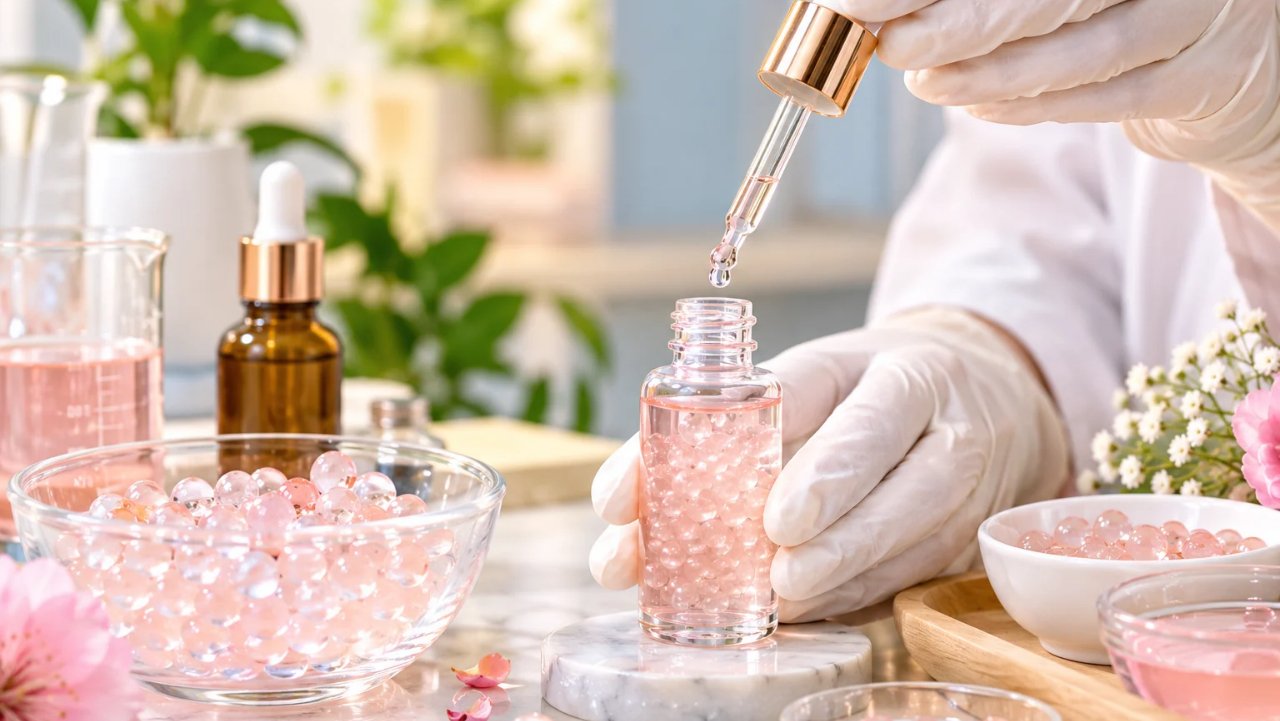
Picture a small jar of glossy little spheres. You press a few between your fingers and they burst. Out comes a light, watery serum that you pat onto your face. That’s the whole trick.
It’s a K-beauty thing, which means texture matters almost as much as the ingredients. Korean brands love a product that’s fun to use, and orbs are very fun. They also come pre-dosed, so there’s no dropper, no pump and no “was that too much?”
Why Is Everyone Talking About Orb Serums?
Mostly because they look great on camera. A bead bursting in slow motion does well on Reels. But there’s more going on than looks.
Dosing is easy. One popular product, for example, tells you to use more orbs on dry skin and fewer on oily skin. That’s advice people actually follow. And for small brands, an orb serum is a way to look different. Walk down any skin care aisle: dropper bottle, dropper bottle, dropper bottle, jar of beads. Guess which one you remember.
Ingredients Used in Face Serum Formulation
The selection of the right ingredients for a face serum is determined by the product's intended purpose and the type of formulation; simply mixing ingredients together is neither a safe nor an effective approach.
Some common categories of cosmetic ingredients are provided below.
1. Humectants
Humectants help attract and retain moisture in the upper layer of the skin.
Examples:
- Glycerin
- Hyaluronic acid
- Propanediol
These ingredients can be used in hydration-focused formulations. However, their appropriate concentration and compatibility should be determined based on the specific formulation.
2. Niacinamide
Niacinamide is a form of vitamin B3 used in properly formulated skincare products. It can help support the skin barrier and improve the appearance of an uneven skin tone.
Before adding niacinamide to a serum, it is important to consider the formulation's pH, ingredient compatibility, and the recommended concentration.
3. Panthenol
Panthenol is also known as provitamin B5. It is used in skincare products for its conditioning and moisturizing properties.
The selection of this ingredient should be based on the overall purpose of the product and its formulation requirements.
4. Aloe Vera-Based Ingredients
Aloe vera-derived components can be used in skincare products to provide soothing and moisturizing benefits. However, raw aloe vera gel and properly processed, cosmetic-grade aloe vera ingredients are not the same.
When developing commercial serums, it is important to use standardized, cosmetic-grade ingredients and to maintain a suitable preservation system.
5. Antioxidant Ingredients
Some skincare formulations incorporate antioxidant ingredients; vitamin C derivatives are one such example. Different forms of vitamin C can vary in terms of their solubility, pH requirements, and stability.
Therefore, it is essential to understand the technical requirements of any antioxidant before adding it to a formulation.
What’s Inside Those Little Beads?
Strip away the capsule and you’ve got a regular serum. Look at the ingredient list of a typical Korean orb serum (here’s an example product page) and you’ll spot the usual suspects. Water and glycerin make the base. Sodium hyaluronate and betaine hold moisture. Niacinamide, panthenol and allantoin condition the skin. Vitamin E acts as an antioxidant, and a preservative, phenoxyethanol in that case, keeps the whole thing safe.
The capsule is where it gets interesting. Some brands use specialised technology, and one product page describes a patented cryogenic method. Simpler approaches use gelling agents to set the serum into beads. Each route has trade-offs in texture, stability and shelf life. Here’s how an orb serum compares with an ordinary one:
| |
Ordinary serum |
Orb serum |
| Texture |
Liquid or light gel |
Tiny beads that burst |
| Dosing |
Dropper or pump |
A set number of orbs |
| Making it |
Mix and fill |
Mix, form beads, stabilise, fill |
| Main headache |
Stability and preservation |
Stability, preservation and keeping the beads intact |
So How Are Orb Serums Actually Made?
Not a recipe. We’re not giving one, on purpose. The exact formula depends on your ingredients, your method and your packaging, and getting those wrong can make a product unsafe. What we can show you is the shape of the process.
First, you design the serum. What’s it for (hydration, glow, comfort?) and which ingredients get you there? Then you pick a capsule method, because that decides what the bead is made of and how it bursts. Next you form the orbs, aiming for beads of the same size, since uneven ones feel uneven on the skin. After that you stabilize them so they don’t leak, clump or collapse in the jar. Then comes filling and packaging. And last, testing: stability over time, warm and cool storage, and a patch test before anyone uses it widely.
Notice what’s missing? A magic ingredient. It’s mostly careful, repeatable work.
Why Most Homemade Orb Serums Fail
Let’s be honest. Plenty of DIY attempts look great on day one and awful by week three. Beads that merge into one blob. Beads so tough they never burst. A jar gone cloudy. A smell that wasn’t there before.
The reasons are boring but real. Water-rich beads are a happy home for bacteria, so preservation has to be spot on. Some activists don’t get along with some capsule materials. The shell has to be strong enough to hold together and weak enough to burst, and that’s a narrow window. Packaging matters more than people think too, especially in a Delhi summer, when a jar can sit in a hot room for days.
If you plan to sell, the stakes go up. A bad batch stops being a failed experiment. It’s something on someone’s face.
What Should an Orb Serum Making Course Teach You?
Serum basics come first. If you can’t make a good plain serum, a bead version won’t rescue it. You need to understand ingredient groups, how they work together, and how to build a base that’s stable and pleasant to use.
Then the capsule side. Which materials, which methods, and what each one costs you in stability or feel. You should see orbs being made in front of you, and then make them yourself. Reading about it doesn’t count.
Preservation and safety are non-negotiable. So are packaging and shelf life, because an orb serum that melts into a block in a hot warehouse isn’t a product. And you need to understand labels and claims. Orb serums attract big words like “repairs” and “regenerates”, and not all of them are safe to print.
At Craft Tree Academy, raw materials used in class are provided (except in some courses), and students take home what they make.
Is Orb Serum Making Right for You?
It suits you if you already enjoy skin care, like a technical challenge, or want a product that stands out for your small brand. It also suits salon and boutique owners thinking about a private-label line.
It doesn’t suit you yet if you’ve never made a cream, gel or serum before. Honestly, start simpler. Our Skin Care & Cosmetics Making Course covers the basics, and face serum is on its list of skin care products. If you like K-beauty textures, the Hydrated Sheet Face Mask Making Course and the Body Butter Making Course are good next steps.
And if you’re hoping the capsule alone will build a brand, a word of caution. People reorder because a product works and feels good, not because it has pretty beads.
The Rules You Can’t Skip in India
This is an overview, not legal advice. Rules change, so check the current position before you sell anything.
The Cosmetics Rules, 2020 sit under the Drugs and Cosmetics Act and cover how cosmetics are made, labelled and sold in India. CDSCO and state licensing authorities administer them. Selling cosmetics commercially generally needs permission from the relevant authority, while making something for yourself or as a class exercise is a different matter.
Be careful with claims. Words like “repairs”, “regenerates” or “treats” can sound like drug claims rather than cosmetic ones, so check what you’re allowed to say before printing a label. Every water-based product needs proper preservation, every new product needs a patch test, and your label should carry the details the current rules require, including ingredients and manufacturer information. Before launching, talk to your state licensing authority or a regulatory consultant.
How Do You Pick a Good Orb Serum Making Class?
Ask a few direct questions. Will I make orbs myself, or only watch? Who teaches, and how long have they been formulating? Do you teach the base serum as well as the capsule method? How do you cover preservation, stability and patch testing? What’s included, and what do I take home? What certificate do I get, and who issues it? How big is the batch, and can I ask questions after class?
If fees, duration and inclusions stay vague after you ask, that’s your answer.
Learning Skin Care Making at Craft Tree Academy
We’re a vocational training institute near Fortis Hospital in Shalimar Bagh, Delhi, and skin care and cosmetic making is one of our main areas. Mrs. Nisha Chopra, our CEO and expert, has 15 years of industry and teaching experience in skin care cosmetics. Mrs. Asha Chauhan, also an expert on the team, specialises in professional and advanced skin care.
We run online and offline classes plus regular workshops, including one-day group workshops. Raw materials used in class are provided (except in some courses), students take home what they make, and you get a certificate for your course. Browse everything on our all courses page or read about us first.
[CONFIRM: whether Korean orb serum is taught as its own course, a workshop, or part of the Skin Care & Cosmetics Making Course, and add the details here.
Frequently Asked Questions
What is a Korean orb face serum?
It’s a serum packed as tiny capsules that burst when you press them on your skin. You get a measured dose of fresh serum each time. It’s popular in K-beauty for the fun texture and easy dosing.
Can I make Korean orb serum at home?
You can experiment, but it’s harder than it looks. The beads have to hold their shape, burst on cue and stay safe from bacteria. Learn basic serum formulation and preservation first, ideally with a trainer.
What ingredients are in an orb serum?
Usually a water-based serum base, hydrators like hyaluronic acid, conditioning ingredients such as niacinamide or panthenol, a preservative, and the material that forms the capsule. The exact mix depends on the product and the method.
Do I need experience before learning orb serum making?
It helps. If you’ve made a basic serum, cream or gel, the capsule method will make more sense. Complete beginners should start with a general skin care making course.
Can I sell orb serums I make?
Commercial sale of cosmetics generally needs the right permissions under the Cosmetics Rules, 2020. Check current requirements with your state licensing authority before selling, and avoid medical-sounding claims.
How do I choose the right course?
Look for hands-on practice, a trainer with real formulation experience, coverage of preservation and stability, and clear information on fees, duration and certificate. Ask what you’ll take home.
Conclusion
Learning how to create 'Korean Orb' face serums can be a valuable pursuit for those interested in the field of skincare and cosmetic formulation. This process involves more than just mixing ingredients; it requires an understanding of formulation science, hygiene, preservation, product stability, packaging, and quality control.
If you wish to explore skincare product development or cosmetic-making skills, you may want to review the courses and syllabus offered by Craft Tree Academy. Before enrolling, please verify whether 'Korean Orb' face serum making is included in your chosen program. With the right knowledge, practical training, and a commitment to responsible product development, you can incorporate cosmetic formulation into your personal learning objectives or future business plans. For admission and course details, contact Craft Tree Academy today.